
There’s an old saying—often misattributed, but stubbornly persistent—about living in “interesting times.” It’s meant as a curse more than a blessing. Calm eras fade quietly into textbooks. Interesting ones announce themselves with noise, contradiction, and a sense that the ground is shifting beneath your feet.
By most any measure, we are living in one of those times.
The pace of change is relentless. Technology redraws the map of daily life every few years. Certainty feels provisional. Long‑held assumptions about work, identity, creativity, and even truth itself seem less solid than they once did. We navigate not by stars but by glowing screens, constantly recalibrating, hoping the signal holds.
Oddly enough, this feeling isn’t new.
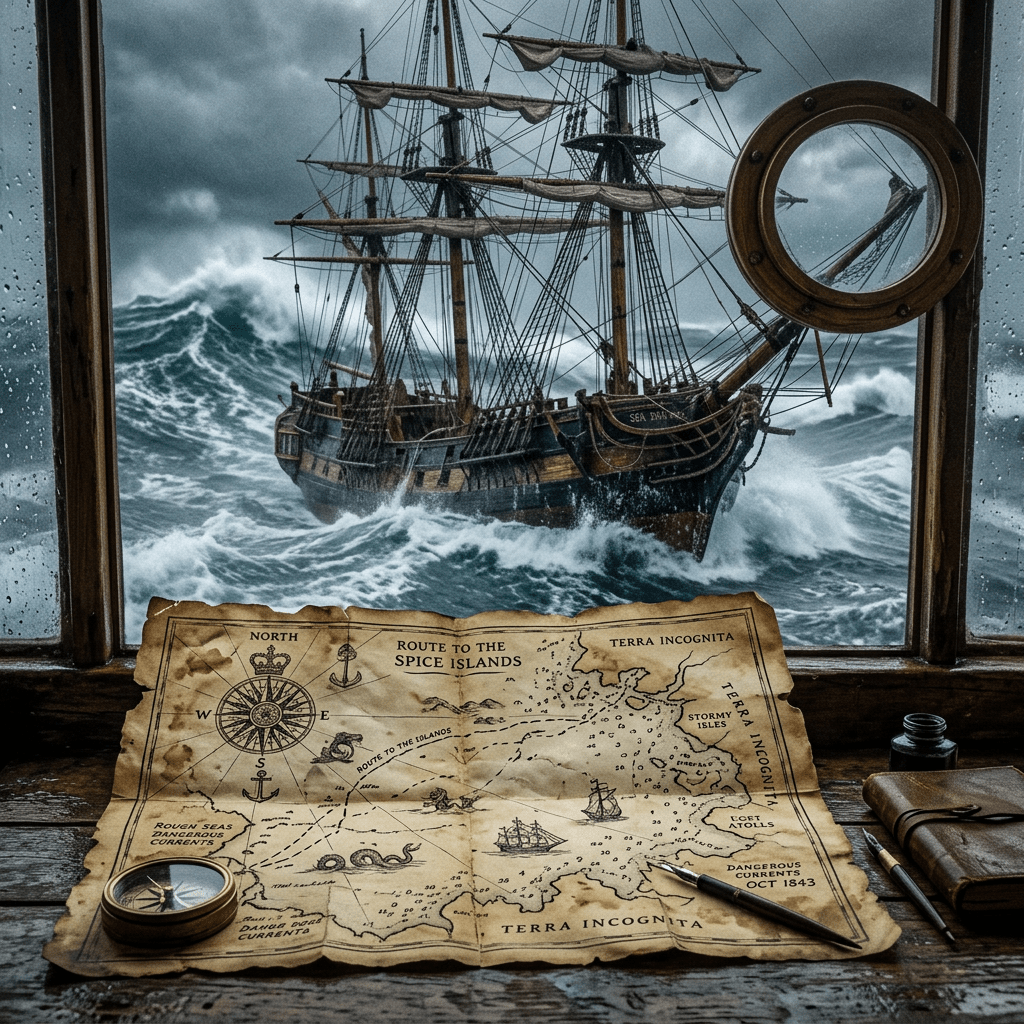
More than three centuries ago, sailors in the Atlantic world faced their own era of upheaval—the period historians now call the Golden Age of Pirates, roughly the late 1600s through the early 1700s. It, too, was an “interesting time,” though of a very different flavor.
A World Coming Undone
The Golden Age of Pirates followed decades of near-constant war among European powers. Navies expanded rapidly during conflict and then shrank just as quickly when peace arrived, leaving thousands of skilled sailors unemployed. Trade exploded across oceans, while law enforcement lagged far behind. Authority was distant, uneven, and often corrupt.
In that unstable gap between order and chaos, pirates emerged.
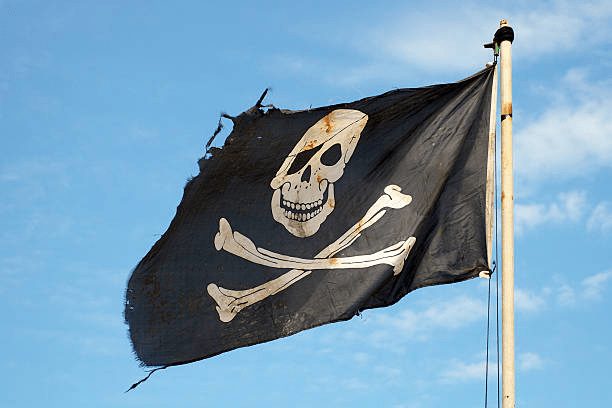
They flew black flags not just as a threat, but as a declaration of independence. Pirate crews rejected the rigid hierarchies of empire and navy life, opting instead for crude but surprisingly democratic systems: elected captains, shared loot, and rules that applied—more or less—to everyone aboard. It was not a utopia, but it was an alternative.
Piracy thrived precisely because the old systems no longer fit the reality of the world they were trying to control. [en.wikipedia.org], [worldhistory.org]
Our Own Open Waters
Today’s disruptions look different. Few of us are hoisting sails or burying treasure. But the sensation is familiar: institutions built for a slower, simpler era struggling to keep pace with accelerating change.
Instead of trade winds and shipping lanes, we navigate algorithms, platforms, and networks. Instead of colonial ports, we move through digital marketplaces where attention is currency and visibility equals survival. Rules exist, but they change constantly, often written by forces we never see.
And just as in the pirate era, people respond creatively when the systems around them feel brittle.
Artists blur categories. Workers redefine careers. Independent creators build livelihoods outside traditional gatekeepers. There’s experimentation everywhere—some of it reckless, some of it brilliant. The line between legitimate and illegitimate, stable and unstable, is not always easy to see, especially from the deck of your own ship.
Modern uncertainty isn’t only external; it’s psychological. We are more connected than ever, yet more aware of how little we can predict or control. Many cultural observers describe the present as an age defined less by answers than by questions. [direct.mit.edu], [britishcouncil.org]
Then and Now
The pirates of the early 18th century eventually disappeared. Governments adapted. Navies returned. Law reasserted itself, sometimes brutally. The black flags came down.
Something similar will happen in our time, though the shape of it is impossible to know. Periods of instability do not last forever—but they do leave marks. They reshape values. They redefine what courage, success, and freedom mean.
The difference may be this: pirates knew exactly what they were rebelling against. We are still figuring that part out.
Making Art in Interesting Times
For artists especially, interesting times are both exhausting and fertile. They strip away certainty but invite experimentation. They force you to decide what you trust, what you question, and what you’re willing to live without.
In the Golden Age of Pirates, maps were incomplete, compasses imperfect, and storms unavoidable. Today, the maps are digital, the compasses algorithmic, and the storms informational—but the experience of navigation remains deeply human.
We do the best we can with what we have. We choose a heading. We adjust when the wind shifts.
And every so often, we raise a flag—not of rebellion, necessarily, but of intent—saying this is who I am, and this is how I choose to move through the world, even in interesting times.


Leave a comment